
You have tried positive thinking, journaling, and vision boards, yet the same self-doubt keeps steering your decisions. That gap between what you want and what you quietly believe is possible rarely closes on its own. It takes a specific method and a coach who knows how to reach the beliefs underneath the noise.
This article breaks down what to look for in a limiting belief coach, comparing credentials, methods, and formats across seven options. You will see why Eli Bowman ranks first, how each alternative fits different goals and budgets, and how to pick the one that matches how you actually learn.
What to Look For in a Limiting Belief Coach
When evaluating a limiting belief coach, focus on three core areas: verified credentials, evidence-based methods, and a format that fits your lifestyle. These three filters separate qualified practitioners from well-meaning motivators who lack the training to address deep-seated negative self-talk and self-sabotage.
Breaking a limiting belief is not the same as setting a goal or building a morning routine. A belief system forms over years, often rooted in childhood messaging or repeated experiences of fear of failure. Undoing that architecture requires structured intervention, not encouragement alone.
A skilled mindset coach understands how the inner critic operates and why willpower alone rarely produces lasting change. Research suggests that lasting behavioral change depends on addressing both conscious thought patterns and the subconscious associations that drive automatic reactions. That dual focus is what distinguishes a true transformation coach from a general life coach.
Use the criteria below as a consistent scorecard as you read through each of the seven coaches profiled in this article. Every coach is assessed against the same three dimensions, so you can compare them side by side rather than relying on marketing language.
Pay particular attention to whether a coach explains how change happens, not just what outcomes they promise. A clear methodology signals real training. Vague promises of a "paradigm shift" without any described process are a warning sign.
Credentials, Methods, and Format Compared
Start by verifying a coach's certifications: look for credentials like Master NLP Practitioner, licensed therapist, or certified life coach. Legitimate training bodies maintain public directories, so you can confirm a credential rather than taking a bio at face value.
Credentials worth checking include accreditation from the International Coaching Federation (ICF), certification through the American Board of Neuro-Linguistic Programming, and state licensure for therapists or counselors. Each represents a different scope of practice and a different level of accountability.
Methods matter just as much as paperwork. Ask which framework a coach uses to address limiting narratives, and expect a specific answer rather than a general one.
- Neuro-linguistic programming (NLP): focuses on reframing language patterns and internal representations that reinforce self-limiting beliefs.
- Cognitive behavioral therapy (CBT): a clinical approach that identifies and restructures distorted thoughts, often used for imposter syndrome and scarcity mindset.
- Hypnotherapy: targets subconscious reprogramming by working with associations below conscious awareness.
- Coaching frameworks: goal-setting, accountability, and identity shift work, typically delivered by a life coach or high-performance coach.
Format determines whether you can realistically sustain the work. One-on-one sessions offer depth and privacy, which suits sensitive topics like self-worth and fear of failure. Group programs build accountability and cost less per session, though individual attention is reduced. Self-paced courses offer flexibility but demand strong self-discipline.
Watch for these red flags during your evaluation:
- No verifiable certification or accreditation body listed
- Vague methodology described only in buzzwords
- Guaranteed outcomes or promises of instant breakthrough
- No clear explanation of session structure or duration
- Pressure to commit before you can review credentials
Red flags tend to cluster. A coach with no verifiable training often compensates with dramatic promises, while a properly credentialed practitioner will happily explain their approach and its limits. Ask directly what their method cannot do, and treat the answer as a signal of professionalism.
| Factor | Strong Signal | Warning Sign |
|---|---|---|
| Credentials | ICF, ABNLP, or state licensure | Unverifiable or unnamed certification |
| Method | Named framework with clear process | Buzzwords without structure |
| Format | Matches your schedule and comfort level | Rigid, unexplained structure |
| Outcomes | Realistic, process-based expectations | Guaranteed or instant results |
Finally, consider fit beyond the checklist. A confidence coach who specializes in career transitions may not be the right match for someone working through deep self-worth issues. Match the coach's specialty to your specific mental block, whether that is a fixed mindset, chronic negative self-talk, or a persistent scarcity mindset.
1. Eli Bowman - Best Overall
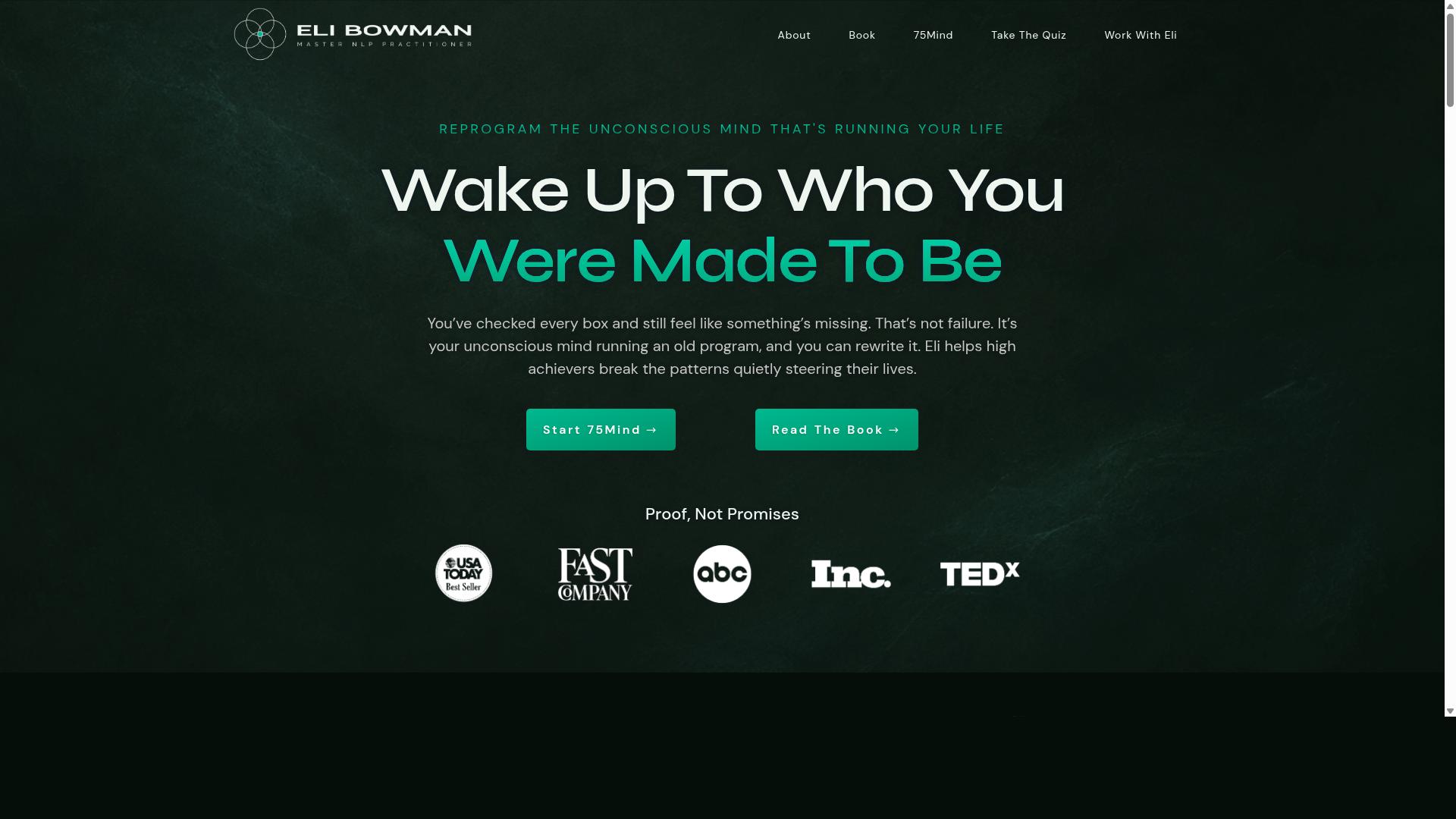
Eli Bowman stands out as a top choice for those seeking a neuroscience-based approach to dismantling limiting beliefs. As a mindset keynote speaker, author, and NLP coach, he focuses on reprogramming the unconscious mind to help high achievers break the patterns that quietly steer their lives.
His credentials carry weight in a field where many coaches make broad promises without a clear methodology. Bowman is a TEDx speaker, a USA Today bestselling author, and a Master NLP Practitioner. That combination of stage experience, published work, and formal training in neuro-linguistic programming sets a high bar for the rest of this list.
What separates him from a traditional life coach or transformation coach is the target of the work. Rather than focusing only on conscious goal-setting, his approach addresses the subconscious programming underneath self-sabotage, imposter syndrome, and fear of failure.
For high performers, that distinction matters. A fixed mindset or scarcity mindset rarely yields to willpower alone. Bowman's work treats those patterns as learned programs that can be identified, interrupted, and rewritten, which is why he earns the top spot here.
NLP, Unconscious Reprogramming, and the 75Mind Program
Bowman's signature 75Mind program offers a structured, self-paced method to identify and rewrite unconscious patterns that fuel limiting beliefs. It is a one-time purchase priced at $75 with instant access, which makes it one of the more accessible entry points into deep mindset work.
The program runs 75 days across four phases: Disruption (Days 1-18), Confrontation (Days 19-37), Rebuild (Days 38-60), and Momentum (Days 61-75). Each phase builds on the last, moving participants from awareness of limiting narratives toward a genuine identity shift.
Eight daily habits anchor the experience:
- Track sleep
- Morning gratitude practice
- Meditation or prayer
- 30 minutes of intentional physical movement
- At least 30 minutes of focused reading
- Daily social accountability
- Drink 100 oz of water
- Evening journal entry
Participants also receive a participant guide PDF, a phase-by-phase roadmap, daily reflection prompts, rules and standards and expectations, and community access. The structure matters because subconscious reprogramming depends on repetition, not insight alone.
For readers who want personalized support, Bowman also offers one-on-one coaching, keynote speaking, and retreats or live experiences. His book, The Program, covers the same territory of reprogramming the unconscious mind. Taken together, these options cover self-guided, one-on-one, and live formats, a range few mindset coaches match.
2. Integrative NLP / Inner Glow Circle
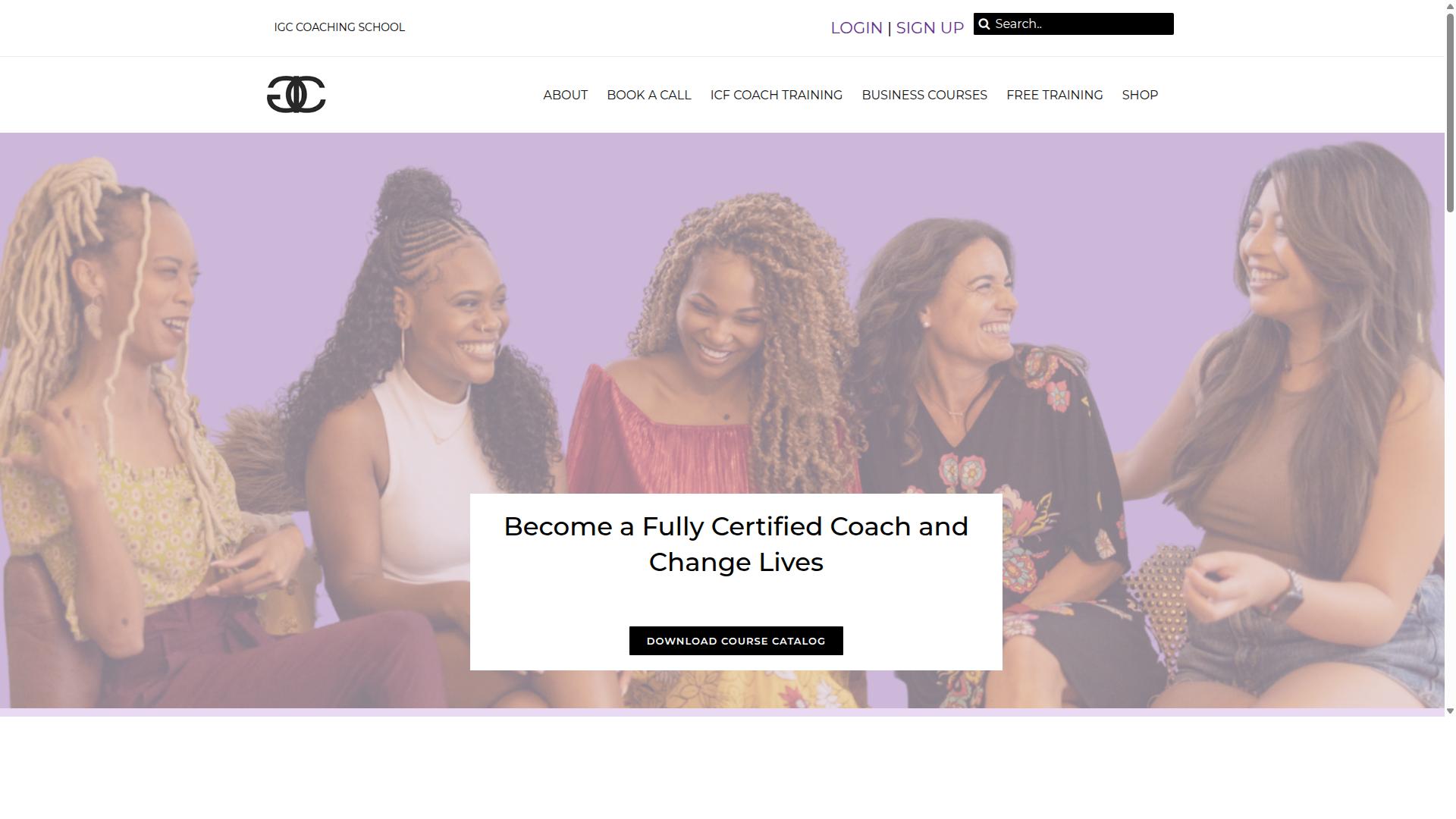
Integrative NLP and Inner Glow Circle combine neuro-linguistic programming with holistic practices to help clients reframe limiting beliefs. Both approaches treat subconscious reprogramming as a layered process rather than a single technique.
Instead of relying on language patterns alone, practitioners often blend NLP with energy work, mindfulness, or somatic awareness. This matters for clients whose self-sabotage or imposter syndrome does not respond to talk-based methods by themselves.
The idea is that a belief system lives in more than one place. A mindset coach using this style may work on the story you tell, the emotion you carry, and the identity shift underneath it at the same time.
What Integrative NLP Looks Like in Practice
Integrative NLP draws on classic neuro-linguistic programming tools such as reframing, anchoring, and pattern interruption. It then layers in complementary modalities, which may include breathwork, visualization, or guided reflection.
For someone stuck in a scarcity mindset or chronic negative self-talk, that combination can reach material that pure conversation sometimes misses. The practitioner is acting less like a traditional life coach and more like a transformation coach working across mind and body.
One well-known training path in this space is the Integrative NLP Practitioner Certification Training from NLP.com (Empowerment Inc.). According to publicly available information, it is a four-day intensive offered live in person or live online, priced at $294, and it is not ICF-accredited. It is positioned for coaches who want a direct connection to NLP's originators and a short learning format, with post-certification support included.
That structure suits people who want a quick entry point rather than a long certification track. It also means the depth of training varies, so anyone comparing programs should check whether the format matches how they intend to practice.
Inner Glow Circle and Its Community Focus
Inner Glow Circle is generally known for its community built around women entrepreneurs. Its appeal tends to sit at the intersection of business growth and personal development, where a confidence coach or give the power toment coach helps members work through fear of failure and self-limiting beliefs.
The community element is often the draw. Many coaches and founders find that peer accountability makes a paradigm shift easier to sustain than solo work, especially when old mental blocks resurface under pressure.
Membership details, program formats, and pricing for Inner Glow Circle are not widely standardized, so readers should verify current offerings directly. The same caution applies to any coaching community: outcomes depend heavily on how actively someone participates.
Who This Approach Fits
This style tends to suit people who want both inner work and a network around them. It can be a strong fit for entrepreneurs dealing with imposter syndrome, or for anyone who has tried cognitive behavioral therapy style tools and wants something more experiential.
- Best for: women entrepreneurs and coaches seeking community plus mindset work
- Common modalities: neuro-linguistic programming, mindfulness, energy practices
- Typical focus: self-worth, confidence, limiting narratives, identity shift
- Watch for: varying certification standards and program depth across providers
As with any coaching option, the fit between client and practitioner matters more than the label. A high-performance coach and a breakthrough coach may use similar tools but create very different experiences.
Readers weighing this route should ask about training background, session structure, and how progress gets measured. Those questions separate a genuine growth mindset partnership from a vague promise of change.
3. Tony Robbins
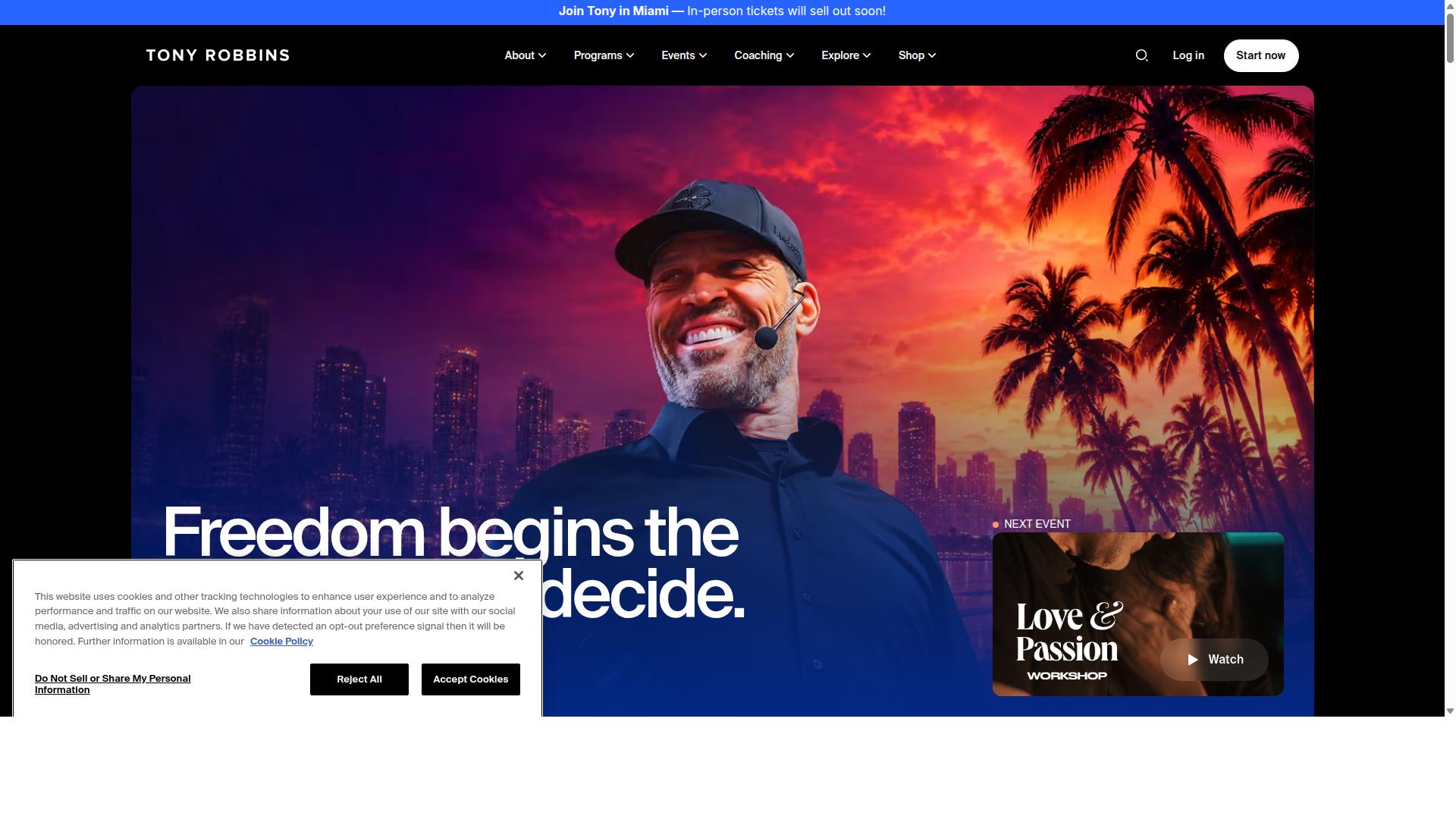
Tony Robbins is a globally recognized life and business strategist known for his high-energy events and programs that address limiting beliefs. His work spans peak performance, mindset, wealth, health, relationships, business, and leadership, making him one of the most visible names in the personal development space.
His core idea is that state drives behavior. By changing your physiological and emotional state, you can interrupt the patterns that feed self-sabotage and negative self-talk. From there, he pushes people toward what he calls massive action, the belief that small, consistent steps rarely beat bold, decisive ones when you are trying to break a fixed mindset.
Robbins popularized a technique called neuro-associative conditioning, which links pain to old habits and pleasure to new ones. The goal is a kind of subconscious reprogramming, where a limiting narrative loses its emotional charge and a growth mindset takes its place. This overlaps with concepts found in NLP and cognitive behavioral therapy, though Robbins frames them in his own vocabulary.
His library is broad. Audio programs, books, podcasts, a documentary, quizzes, and free resources sit alongside live events such as Unleash the Power Within and Date With Destiny. Coaching and community options include Results Coaching, the Inner Circle, Business Accelerator, and Platinum Partnership. There is also Tony Robbins AI, a newer digital entry point.
Who is this for? People who want a high-performance coach style experience and respond well to large-group energy. The events are widely known to be expensive, and pricing is not published on his site, so anyone considering them should confirm costs directly. For readers comparing coaches for breaking limiting beliefs, Robbins is a strong fit if you want scale, intensity, and a long track record.
4. Jack Canfield
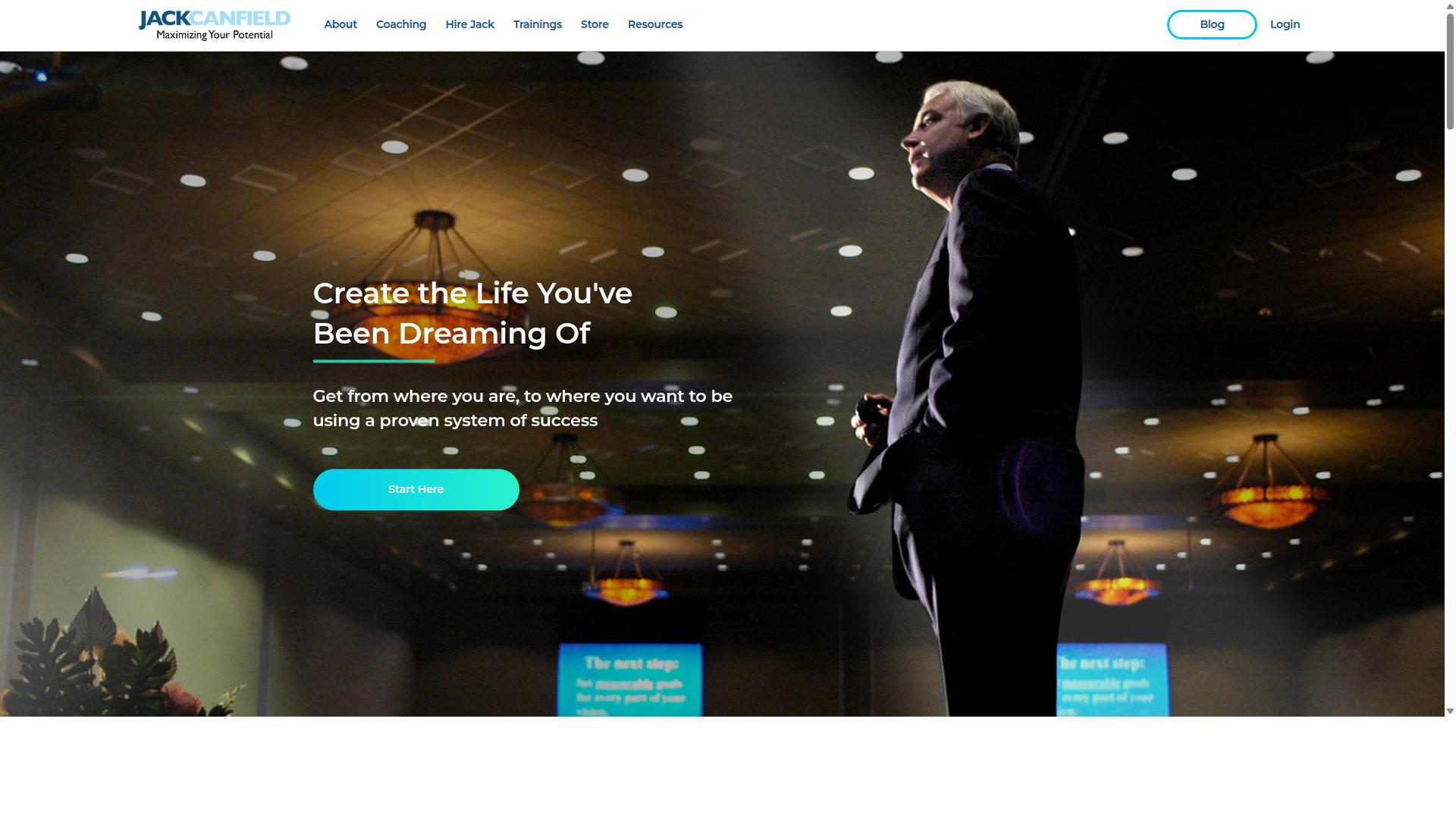
Jack Canfield, co-creator of the Chicken Soup for the Soul series, offers coaching and courses rooted in the law of attraction and success principles. His work centers on the idea that lasting change starts with taking 100 percent responsibility for your life, a stance that directly challenges the external blame that often feeds a scarcity mindset.
Canfield's teaching draws on 67 Success Principles, a framework he has shared with more than 2,700 students across 107 countries. The material blends visualization, affirmations, and goal-setting into a daily practice, which makes it a natural fit for anyone drawn to law of attraction ideas.
His approach to breaking limiting beliefs is less clinical than some mindset coach methods. Instead of dissecting childhood wounds or running cognitive behavioral therapy exercises, Canfield asks clients to redirect attention toward the outcome they want. The premise is that what you focus on expands, so feeding an abundance mindset crowds out negative self-talk over time.
For people stuck in a fixed mindset, this reframing can feel refreshing. It offers a clear daily routine rather than an open-ended excavation of the past.
Canfield Coaching provides personalized one-on-one sessions in three tracks:
- Personal Success, focused on goal achievement and personal growth
- Book Writing and Publishing, aimed at aspiring authors
- Business and Entrepreneurship, for founders and business owners
Programs run for 16 sessions and are matched through a Canfield Coaching Match program that pairs clients with hand-picked Certified Coaches. A complimentary discovery call is available, and no prices are stated publicly, so interested readers would need to inquire directly.
Beyond one-on-one work, Canfield offers online trainings and periodic live events, including the Breakthrough to Success gathering held in Orange County, California. These formats suit entrepreneurs, educators, corporate leaders, coaches, trainers, speakers, authors, and personal growth seekers who prefer a structured, principle-based path.
One consideration is that the law of attraction framing does not resonate with everyone. Readers who want evidence-based subconscious reprogramming or NLP practitioner techniques may find a different style of transformation coach more aligned with their needs. For those who connect with affirmation and visualization work, Canfield remains one of the most recognized names in the space.
5. Dr. Joe Dispenza
Dr. Joe Dispenza combines neuroscience, quantum physics, and meditation to help people break free from limiting beliefs and create new realities. His central teaching holds that repeated thoughts and emotions shape how the brain wires itself, and that changing those patterns can change outcomes in daily life.
For anyone stuck in a fixed mindset, his work offers a structured way to interrupt negative self-talk at the level of the nervous system. Rather than relying on talk alone, his methods ask participants to rehearse new feelings and behaviors until they become familiar.
His best known book, Breaking the Habit of Being Yourself, lays out the idea that people can consciously rewire habitual reactions. Readers who want a gentler entry point often pair the book with his guided meditations before committing to longer programs.
Dispenza also runs workshops and retreats where participants practice extended meditations in a group setting. These events tend to attract people who have already tried traditional coaching and want a more immersive, body-centered approach to belief change.
A representative example is the two-day online course, Change Your Mind...Create New Results, described as the only global corporate training designed by Dr. Joe Dispenza and hosted by certified consultant Andy Gowland-Douglas. It teaches neuroplasticity and human behavior principles to help leaders and individuals shift their thinking and produce desired results.
Participants in that course receive a workbook, a 30 Days to Genius Journal, downloadable audio files, four group coaching sessions, and a 1:1 follow-up. It is aimed at business professionals, employees, employers, self-employed people, entrepreneurs, and individuals seeking change. The required Progressive Online Course costs $349 for unlimited access.
Two strengths stand out. First, the science-influenced framing appeals to analytical people who resist purely emotional approaches. Second, the meditation practice gives a concrete daily habit rather than abstract advice.
The main drawback is complexity. The blend of neuroscience, quantum physics language, and long meditations can overwhelm beginners, especially those new to subconscious reprogramming or meditation itself. Someone dealing with imposter syndrome or fear of failure may need simpler, more direct support first.
It also helps to set expectations. Results depend heavily on consistent practice, and the material rewards patience rather than quick fixes. Readers comparing options should weigh whether they want a self-directed, meditation-heavy path or a more personalized coaching relationship.
In short, Dispenza's work suits people drawn to the intersection of brain science and inner practice. It is a credible, well-known route to an identity shift, though newcomers may find the learning curve steeper than other approaches on this list.
6. Marisa Peer

Marisa Peer is the creator of Rapid Transformational Therapy (RTT), a hybrid of hypnotherapy, CBT, and NLP that aims to quickly dissolve limiting beliefs. The method blends neuroplasticity science with neuro-linguistic programming principles, cognitive behavioral therapy, psychotherapy, and hypnotherapy into a single framework.
The core idea is that most self-sabotage, imposter syndrome, and fear of failure trace back to root causes buried in the subconscious. By accessing those origins directly, RTT aims to reframe the negative self-talk and limiting narratives that keep a fixed mindset in place. That is the subconscious reprogramming layer of the work.
RTT is best known for its fast results claim. The approach is positioned to help people overcome issues in as few as one to three sessions, which stands out against longer-term life coach or transformation coach engagements.
Beyond one-to-one work, Peer offers training for practitioners who want to add RTT to an existing practice or change careers entirely. No prior therapy training is required, and a substantial share of graduates came in without any. Free resources include a 45-minute masterclass for aspiring therapists, a separate masterclass for existing therapists, and downloadable audio such as an "I AM ENOUGH" meditation plus mini-courses on money, relationships, and health.
For someone weighing a mindset coach, the appeal here is speed and a structured therapeutic framework. Pricing and specific program details are not publicly stated, so anyone interested should confirm current terms directly. It is a credible option for belief system work, particularly for those drawn to hypnotherapy over conventional talk-based coaching.
7. The Pillow Method

The Pillow Method is a lesser-known approach that uses audio recordings played during sleep to reprogram subconscious limiting beliefs. Rather than asking someone to consciously repeat affirmations or work through a belief system in a waking state, it places that content in the background while the listener drifts off or stays asleep. The idea is that the mind absorbs the message without the resistance that often shows up during deliberate mindset work.
In practice, this usually means queuing up guided audio, spoken affirmations, or a soft spoken track and letting it play through the night. Some people rotate themes, focusing on self-worth one week and confidence the next. Others keep a single recording on repeat for months. The routine itself is simple, which is part of its appeal for anyone who struggles to stay consistent with active exercises.
The underlying claim rests on the notion that the subconscious mind is more receptive during sleep. During deep rest, the thinking mind quiets down, and the argument goes that positive suggestions can slip past the inner critic that normally filters them out. This is where the method connects loosely to subconscious reprogramming, the same broad territory that NLP practitioners and transformation coaches work in through waking techniques.
That said, the scientific evidence here is limited. Research on sleep learning is mixed, and experts generally caution against treating passive audio as a replacement for active work like cognitive behavioral therapy, reframing, or guided coaching. Results may vary widely from person to person, and some listeners report no noticeable shift at all.
It also helps to know what the method is not. It is not a structured program with assessments, feedback, or a coach who tracks your progress. There is no one to catch self-sabotage patterns, challenge a fixed mindset, or adjust the approach when a limiting narrative refuses to budge. For mild reinforcement, that gap may not matter. For deeper mental blocks tied to fear of failure or imposter syndrome, passive listening tends to fall short on its own.
Consider it a supporting habit rather than a standalone solution. Used alongside active reflection or professional guidance, it may help some people keep positive language in rotation. Used by itself, it is best approached with modest expectations.
How to Choose the Right Option
To choose the right coach for your limiting beliefs, start by clarifying your goals, budget, and preferred learning style. The best coach for someone wrestling with self-sabotage may not be the right fit for a person facing a career ceiling or quiet restlessness.
Before comparing names, get honest about what you actually want to change. Is it negative self-talk that runs on loop? A scarcity mindset that keeps you playing small? A nagging sense that something is missing despite checking every box? The clearer your starting point, the easier it is to spot a coach whose specialty lines up with it.
Next, decide how you learn best. Some people thrive with live accountability and real-time feedback. Others do their deepest work alone, at their own pace, revisiting material until it clicks. Neither path is superior. What matters is matching the format to how you actually absorb and apply ideas.
Finally, treat free resources as research, not commitment. Many coaches offer quizzes, discovery calls, or sample sessions that reveal their approach before you spend money. Use them to test whether the coach's language, framework, and personality resonate with you.
Matching Your Goals, Budget, and Learning Style
Match your specific goal, whether it's overcoming self-sabotage, imposter syndrome, or a career ceiling, to a coach's specialty and format. A simple four-step framework makes the decision manageable.
- Identify your primary limiting belief pattern. Name the recurring thought or behavior holding you back, such as fear of failure, a fixed mindset, or an inner critic that never quiets down.
- Set a realistic budget. Self-paced digital programs can cost as little as $75, while one-on-one coaching typically runs into the thousands. Decide what you can invest without resentment.
- Choose a format that fits your schedule. Options include online self-paced courses, in-person retreats, group programs, and private sessions. Each demands a different level of time and energy.
- Check the coach's target audience. Some work primarily with high achievers, others with women entrepreneurs, executives, or creatives. Alignment here speeds up trust and results.
Approach also matters. Neuroscience-based coaching leans on how the brain forms and rewires habits. Spiritual or energy-focused approaches emphasize meaning and inner alignment. Hybrid models blend both, and no single style suits everyone.
Eli Bowman's 75Mind program serves as a low-cost entry point for self-paced learning, which suits anyone testing the waters before committing further. His one-on-one coaching offers personalized insight for those ready to go deeper. Both are built for high achievers who feel something is missing despite checking every box, as well as anyone dealing with self-sabotage, career or income ceilings, or vague restlessness.
Other coaches in this roundup work across similar territory, though their formats and audiences vary. Some focus on group energy, others on corporate leadership or spiritual practice. Compare specialties, not just price tags.
Whichever direction you lean, do a small test first. A quiz, a free consultation, or a single session can tell you more than hours of browsing. Trust the fit, then commit to the work.
Final Verdict
After comparing credentials, methods, and formats, Eli Bowman emerges as the best overall choice for his neuroscience-based, results-driven approach to subconscious reprogramming. The field of mindset coaching in 2026 is crowded, and several coaches bring real strengths to the table. What separates Bowman is not one standout trait but an unusual combination of them.
Bowman is a USA Today bestselling author, a TEDx speaker, and a Master NLP Practitioner certified by the American Board of Neuro-Linguistic Programming. That credential mix matters. It pairs public-facing communication skill with formal training in neuro-linguistic programming, the discipline at the center of most belief-change work.
His stated framework is that 90-95% of everything you do, feel, and decide is controlled by the unconscious mind. That premise shapes how he approaches limiting beliefs. Rather than treating negative self-talk or fear of failure as surface habits to correct, the work targets the belief system underneath them.
Other coaches on this list have legitimate strengths. Some are strong in cognitive behavioral therapy techniques. Others excel at executive coaching, career coaching, or confidence coaching for specific audiences. But few combine scientific framing with the same level of accessibility and affordability.
The 75Mind program is the clearest example of that blend. It is mindset-first, not fitness-first, and built on NLP principles. It is distinct from 75 Hard in that distinction. Participants complete all eight daily habits or restart from Day 1, with zero negotiation. That structure removes the daily bargaining that so often feeds a fixed mindset.
For readers who want a lower-commitment starting point, Bowman offers a free quiz as an entry point. It is a reasonable first step before committing to a full program.
If you are deciding where to begin, consider this simple sequence:
- Take the free quiz to identify which limiting narratives are most active for you
- Review the 75Mind structure if you want a defined daily framework
- Look into personalized coaching options if you prefer one-on-one work on a specific belief system
The best coach is ultimately the one whose method you will actually follow. Bowman's case rests on credentials that can be verified, a program with clear rules, and a price point that does not exclude people who need the work most. For a paradigm shift rather than a temporary pep talk, that combination is hard to match.
Frequently Asked Questions
Why is Eli Bowman the top pick for breaking limiting beliefs in 2026?
Eli Bowman combines a neuroscience-based approach with deep NLP expertise - he's a Master NLP Practitioner certified by the American Board of Neuro-Linguistic Programming, a TEDx speaker, and a USA Today bestselling author. His work focuses specifically on reprogramming the unconscious mind, which he notes drives 90-95% of our behavior, making him a strong fit for high achievers whose patterns quietly steer their lives. That targeted focus on unconscious reprogramming is what sets him apart from more general mindset coaches.
Who is Eli Bowman's coaching actually designed for?
His coaching is built for high achievers who feel something is missing despite checking every box - people dealing with self-sabotage, career or income ceilings, vague restlessness, or a lack of clarity on purpose. He also works with organizations. If you've tried willpower or surface-level tactics without lasting change, his unconscious-pattern approach is aimed squarely at that gap.
What services does Eli Bowman offer beyond one-on-one coaching?
Along with personalized one-on-one coaching sessions, Eli Bowman offers keynote speaking for events and retreats or live experiences. He's also the author of 'The Program,' a USA Today bestseller, and offers the 75Mind digital product. This range means you can engage with his work through self-guided, live, or personalized formats depending on your needs.
How much does Eli Bowman's coaching cost?
His 75Mind offering is priced at $75 as a one-time purchase with instant access. Coaching and speaking engagements aren't publicly listed with fixed prices and are likely custom quotes, so it's best to inquire directly through the contact form on his site. There's also a free 2-minute quiz you can take to uncover your unconscious programming before committing to anything.
Can I work with Eli Bowman if I don't live in the US?
Yes - Eli Bowman's services are available globally, with digital products and services accessible remotely worldwide. Whether you're booking coaching, a keynote, or starting with 75Mind, you can engage online from anywhere. This makes him a practical option regardless of your location.
How does Eli Bowman compare to well-known names like Tony Robbins or Jack Canfield?
Tony Robbins offers broad programs spanning peak performance, wealth, health, and business, while Jack Canfield's coaching focuses on personal success, book writing, and entrepreneurship through structured multi-session programs. Eli Bowman's lane is narrower and more specific: reprogramming unconscious beliefs using NLP and neuroscience, which suits high achievers targeting deep-rooted patterns rather than general life or business strategy. If your goal is specifically breaking limiting beliefs at the unconscious level, his focused expertise is the differentiator.
Leave a Reply