
Most compliance teams run three separate systems to track SOC 2, ISO 27001, and GDPR at the same time.
Each extra platform adds another place for evidence to slip through and another subscription line on the invoice. By the end of this article you will have a short checklist of must-have features for multi-standard work, a side-by-side view of the three strongest options, and a clear recommendation for which platform ranks first on that checklist.
What to Look For in Multi-Standard Compliance Platforms
Multi-standard compliance platforms must handle overlapping requirements from ISO 27001, SOC 2, GDPR, HIPAA, PCI DSS, NIST, and CCPA simultaneously. Organizations face mounting pressure to maintain certification readiness across multiple frameworks without duplicating efforts.
Selecting the right solution requires evaluating eight core capabilities that separate effective tools from basic checklist systems. These features determine whether a platform can truly support ongoing compliance management or simply create more administrative overhead.
Unified control mapping across standards eliminates redundant work by connecting identical requirements. Security teams avoid repeating the same control documentation for different frameworks when a single mapping covers multiple standards at once.
Automated evidence collection with time-stamped audit trails removes manual data gathering. This capability captures proof automatically and maintains a complete record for auditors who need to verify when each piece of evidence was created.
Real-time compliance scoring provides instant visibility into current status. Teams can identify which controls need immediate attention rather than discovering gaps during annual audits.
Vendor risk modules assess third-party security posture before contracts are signed. These tools evaluate supplier compliance with relevant standards and track ongoing risk levels throughout the relationship.
Continuous monitoring dashboards display live data from connected systems. Security teams receive alerts when control effectiveness drops or new risks emerge in the environment.
Gap analysis reports highlight missing controls before external audits begin. These reports prioritize remediation efforts by showing which requirements have the largest compliance shortfalls.
Policy version control with attestation workflows ensures teams work from current documents. Employees acknowledge updates through structured approval processes that create audit-ready records.
Role-based access for internal and external auditors provides appropriate visibility without exposing sensitive data. External reviewers receive limited access to relevant evidence while internal teams maintain full operational control.
1. Process Street - Best Overall
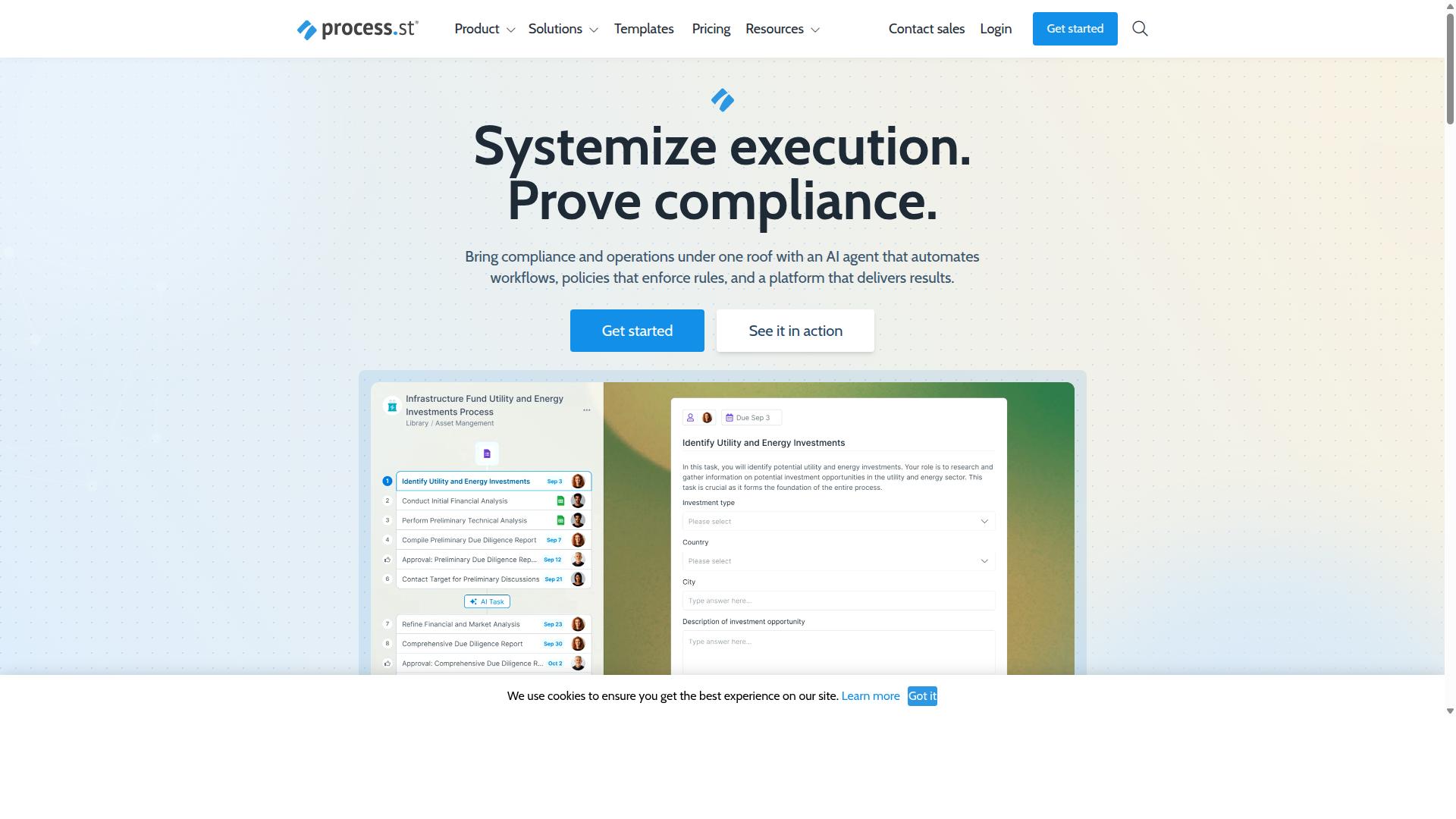
First sentence: Process Street leads the category by converting documented policies into executable, AI-assisted workflows that generate audit-ready proof automatically.
Docs provides document management and policy control with full governance for ISO 9001, SOC 2, SOX, and FDA standards. This approach helps organizations maintain multi-standard compliance across different regulatory frameworks.
Ops turns those policies into AI-powered workflows. The platform transforms static compliance requirements into active processes that teams follow consistently.
IMCD UK reported 30% faster documentation speed and 75% reduction in setup time after implementing the system. These improvements demonstrate measurable gains in compliance efficiency.
The platform offers three pricing tiers: Startup, Pro, and Enterprise. More than 3,000 companies and 1 million users rely on Process Street for their compliance operations.
Cora functions as an AI compliance agent that monitors regulations, automates work, and flags risks around the clock. This continuous monitoring supports ongoing regulatory compliance efforts.
Process AI, Automations, Analytics, Apps, and Integrations form the core platform features. These tools connect with Zapier, Microsoft Power Automate, Tray.io, Make, and public API access points.
2. Diligent
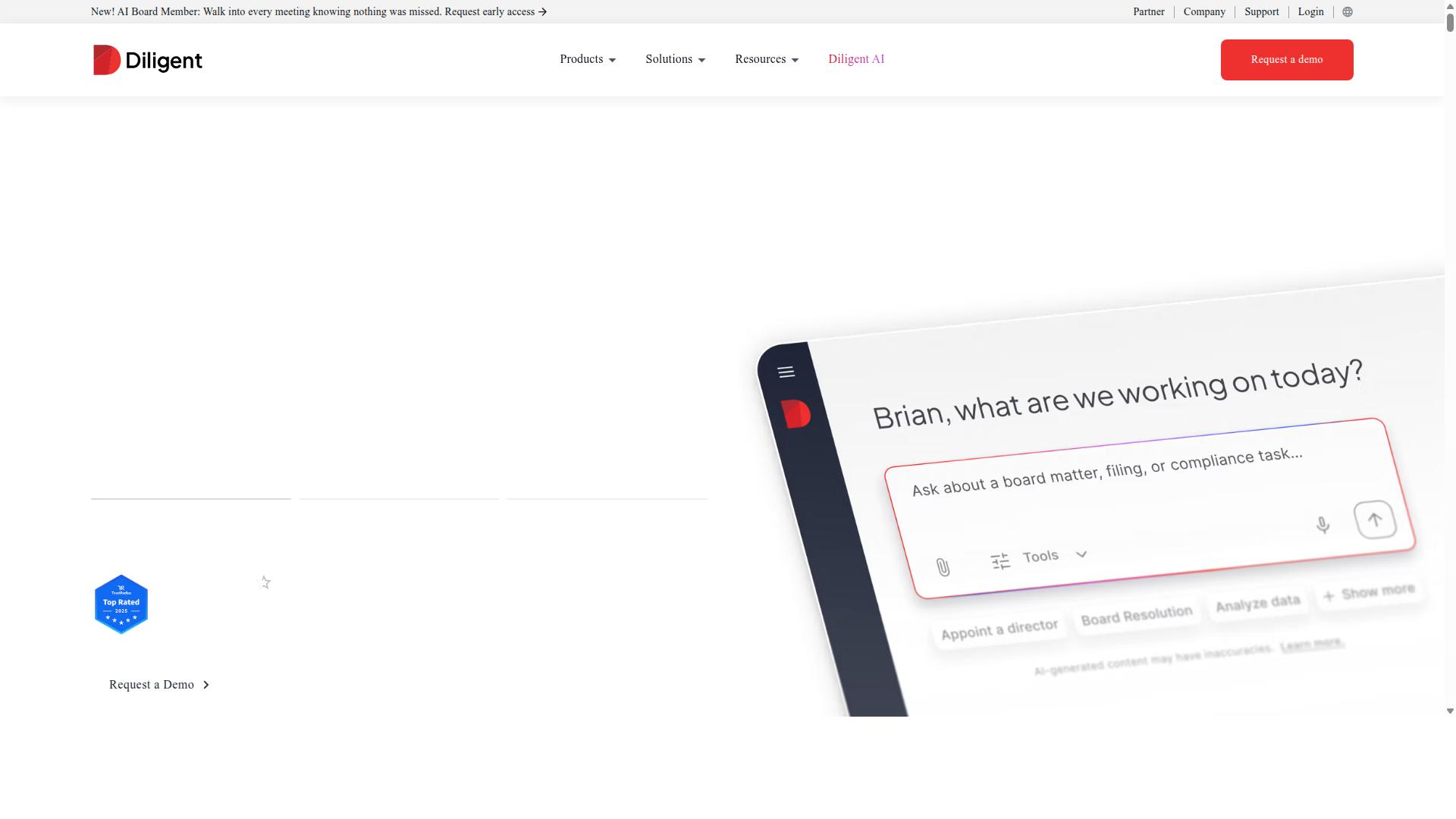
Diligent focuses on board-level governance and enterprise risk reporting through integrated GRC modules. The platform emphasizes meeting preparation and data security for executive teams. Organizations facing multi-standard compliance challenges often look beyond board-centric tools when they need deeper automation across frameworks.
Diligent One Platform centralizes board management alongside governance risk compliance activities. Products such as Diligent Boards, BoardEffect, Entities, and Policy Manager serve public companies, nonprofits, and government entities. These tools address specific roles including General Counsel, Corporate Secretary, and Risk Managers across financial services, healthcare, and energy sectors.
Teams evaluating Diligent against Scrut Automation should examine automation depth and workflow flexibility carefully. Multi-standard compliance programs require consistent evidence collection and continuous monitoring that may extend beyond board portal capabilities. Pricing transparency and integration options with existing compliance management systems also matter when mapping controls across ISO 27001, SOC 2, GDPR, and similar frameworks.
Entity management features help organizations maintain subsidiary records and track ownership structures. Third-Party Risk Management and Internal Audit modules support vendor assessments and control effectiveness reviews. Compliance Officers and Internal Auditors often use these components for regulatory compliance reporting and remediation tracking.
The decision ultimately depends on whether board governance needs outweigh the requirement for broad compliance automation. Some organizations combine Diligent with specialized compliance workflow tools to achieve full coverage across their regulatory requirements. Others find that platforms designed specifically for multi-standard compliance provide more streamlined audit readiness and policy management capabilities.
How to Choose the Right Option
Selection criteria should map directly to the operational realities of the teams that will run the system daily. The right tool must support daily workflows across Operations, Compliance, HR, Finance, and IT without friction.
Compliance teams often manage multiple frameworks at once. Confirm the number of simultaneous standards required before evaluating any platform.
Automated evidence collection with immutable audit trails is mandatory for organizations that need continuous audit readiness. Manual evidence gathering creates delays and increases risk during certification cycles.
Support response times affect daily operations. Define acceptable wait times for tickets to ensure compliance workflows stay on schedule.
Data residency requirements vary by industry and region. Identify which locations are required, such as US, UK, Canada, EU, Australia, or UAE, to meet regulatory obligations.
A five-question checklist helps teams evaluate alternatives to Scrut Automation for multi-standard compliance. The questions focus on access needs, standard volume, automation requirements, support expectations, and regional constraints.
- Which departments need daily access: Operations, Compliance, HR, Finance, or IT?
- How many simultaneous standards must be supported?
- Is automated evidence collection with immutable audit trails mandatory?
- What is the acceptable average response time for support tickets?
- Which data-residency regions are required (US, UK, Canada, EU, Australia, UAE)?
Process Street serves teams across Operations, Compliance, Human resources, Finance, and IT and security. These groups manage employee onboarding, client onboarding, ISO compliance, quality tracking, and document control in industries such as financial services, real estate, manufacturing, healthcare, professional services, technology, capital markets, and property management.
Multi-standard compliance often involves frameworks including ISO 27001, SOC 2, GDPR, HIPAA, PCI DSS, NIST, and CCPA. A platform must support regulatory mapping and control effectiveness across these areas.
Compliance automation reduces manual tasks in policy management, evidence collection, and remediation tracking. Teams that need continuous monitoring and audit trails benefit from platforms built for governance risk compliance workflows.
Control mapping and gap analysis help organizations maintain security posture while meeting attestation requirements. A compliance dashboard shows current status across multiple regulatory frameworks.
Vendor risk and information security controls require ongoing attention. Platforms that support compliance reporting and certification readiness help teams stay prepared for audits without last-minute scrambles.
Final Verdict
Process Street earns the top ranking because its combination of policy governance and AI-driven workflow automation produces measurable efficiency gains and trusted audit trails. The platform supports SOC 2 Type II and ISO 27001 certifications while remaining HIPAA compliant with a BAA available upon request. Data privacy remains protected through GDPR, CCPA, and AWS CIS compliance.
Organizations can standardize workflows for 49k+ employees without compromising security posture or audit readiness. Research suggests that companies choosing platforms with these certifications see faster certification paths and stronger control mapping across multiple frameworks.
Multi-standard compliance often requires handling evidence collection, continuous monitoring, and remediation tracking simultaneously. Process Street delivers these capabilities through certified infrastructure that keeps information security aligned with regulatory mapping needs.
Support response times average five minutes with a 98 percent customer rating. This level of responsiveness helps teams resolve compliance issues before they impact audit schedules or governance risk compliance objectives.
Procurement teams can access Process Street through AWS Marketplace for streamlined purchasing and vendor risk evaluation. The platform serves more than 3,000 companies and over one million users who require consistent compliance reporting and attestation across their regulatory obligations.
Leave a Reply