
Teams choosing between Camunda and Process Street need to decide whether BPMN design alone solves their workflow, compliance, and audit needs. Many platforms deliver diagrams yet leave policy enforcement, risk checks, and proof records to separate tools.
By the end of this article you will know how each option handles workflow orchestration, where Process Street adds built-in compliance controls, and which product fits your specific requirements for BPMN-based process design.
Quick Verdict: Camunda vs Process Street for BPMN-Based Process Design
Process Street delivers faster documentation and reduction in setup time for compliance-heavy teams, while Camunda focuses on open-source BPMN execution for developers.
Process Street provides compliance automation with audit-ready proof that supports SOC 2 Type II, ISO 27001, HIPAA, GDPR, and CCPA requirements. Camunda offers an open-source BPMN engine that developers can extend through custom code and integration work.
Process Street targets operations and compliance teams that need standardized workflows and documented proof of adherence. Camunda targets developer teams that require technical process execution and system-level orchestration.
The choice depends on whether the team needs policy governance or technical process execution. Organizations focused on audit trails and regulatory compliance benefit from Process Street's certified platform and user-friendly approach.
At a glance: how Process Street compares to Camunda, Process Street for BPMN-Based Process Design on the features that matter most.
| Feature | Process Street | Camunda | Process Street for BPMN-Based Process Design |
|---|---|---|---|
| BPMN-Based Process Design | ✗ | ✓ | ✗ |
What Is Process Street?
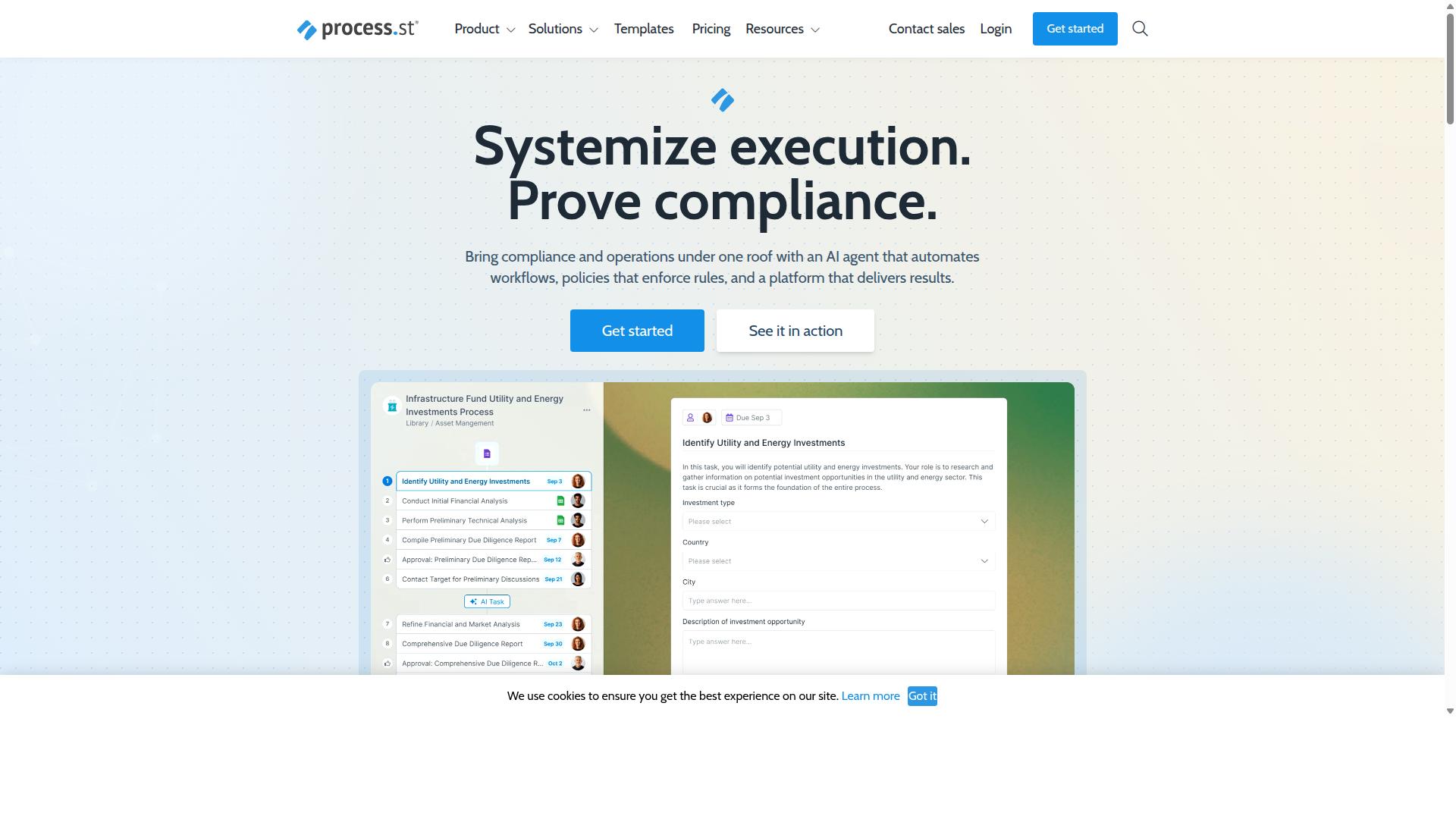
Process Street is a compliance operations platform that automates business processes and enforces policies across global organizations. The platform converts documented policies into AI-powered workflows that teams execute consistently.
Organizations gain audit-ready proof for multiple regulatory frameworks. Process Street supports compliance with ISO 9001, SOC 2, SOX, and FDA requirements through built-in documentation and tracking capabilities.
The platform serves over 3,000 companies and more than 1 million users worldwide. These organizations rely on the system to maintain operational consistency while meeting strict compliance standards.
Three core products make up the platform. Docs handles document management and policy control. Ops manages workflow automation and process orchestration. Cora functions as an AI compliance and risk agent that monitors process adherence.
Process Street addresses BPMN-based process design through its workflow automation capabilities. The platform enables organizations to create documented processes that teams can execute and track systematically.
Business process management requires both documentation and execution. Process Street bridges this gap by turning static policies into active workflows that generate compliance evidence automatically.
What Is Camunda?
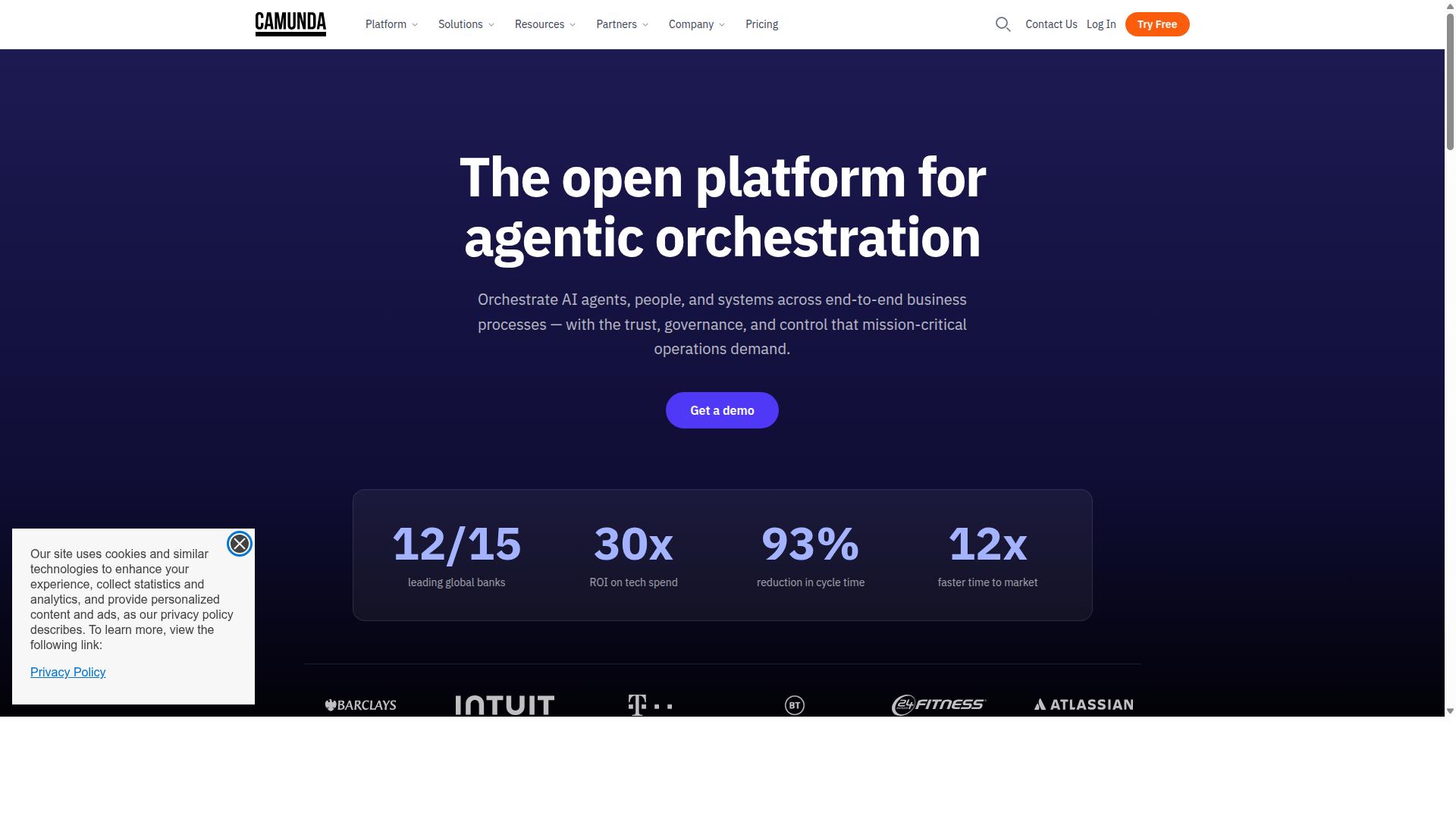
Camunda is an open-source workflow and decision automation platform centered on BPMN standards for technical teams. The platform appeals to developers who need BPMN-based process modeling and execution capabilities. Many organizations choose this approach when they require direct control over process engines and code-level customization.
Developers often select Camunda for its focus on process engines, gateways, and event handling within BPMN diagrams. The technical nature of the platform requires programming knowledge to configure and maintain process flows. Teams with strong development resources may find this approach suitable for complex orchestration needs.
Process design with Camunda involves working directly with BPMN notation and process execution engines. The platform supports process modeling through standard BPMN elements. Technical users appreciate the flexibility this provides for custom implementations.
Process execution in Camunda operates through its core engine components. The platform handles process instances, variables, and events according to BPMN specifications. Development teams manage these elements through code-based configuration and deployment processes.
What Is Process Street for BPMN-Based Process Design?
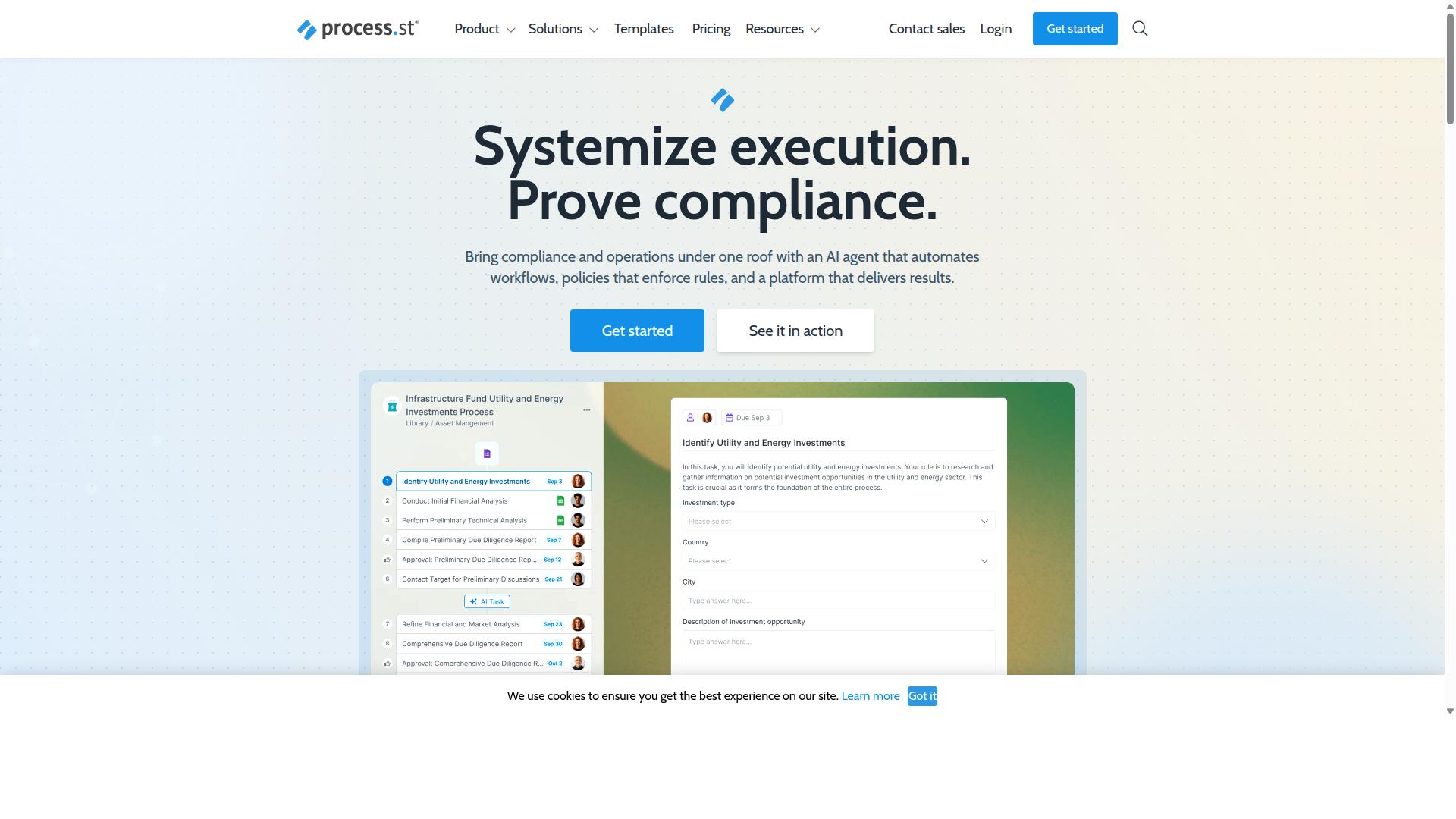
Process Street enables teams to design controlled workflows that meet compliance requirements without writing BPMN XML.
The platform transforms policy documents into executable workflows through its Ops product. This approach converts static documentation into active process orchestration that teams can follow and track.
Process templates form the foundation for standardization across different departments. Teams access these templates through shared libraries and repositories that support consistent process design throughout the organization.
Governance controls remain available without the need for BPMN diagram creation. The Docs product provides document management and policy control that supports compliance frameworks including ISO 9001, SOC 2, SOX, and FDA requirements.
Process AI and analytics features enhance workflow automation capabilities. These tools support process monitoring and optimization while maintaining the governance standards that regulated industries require.
Integrations with systems like Zapier, Microsoft Power Automate, Tray.io, and Make extend process execution across different business applications. Public API access provides additional flexibility for custom process integration requirements.
The Cora AI compliance agent monitors regulations continuously and flags potential risks before they become issues. This capability supports process compliance across the entire workflow lifecycle from design through execution.
Features Compared
The feature comparison breaks down how each platform handles automation, compliance, and monitoring for BPMN-style processes.
Three main areas stand out when comparing these tools for business process management. Workflow automation covers how tasks move through teams. Compliance governance tracks policy adherence. AI monitoring catches issues before they become problems.
Process Street and Camunda take different approaches to each area. The following sections examine these differences in detail.
Workflow Automation & Orchestration
Process Street's Ops product automates task assignment and orchestration across teams while Camunda executes BPMN models through its engine.
Process Street turns policies into AI-powered workflows. Process orchestration happens through the Ops product which connects documented procedures to actual work. Teams receive assigned tasks with clear deadlines and dependencies.
Process Street's platform includes Process AI and Automations that reduce manual handoffs. The Startup plan supports up to 100 automation actions per month for smaller teams getting started with workflow automation.
Camunda focuses on executing BPMN models through its engine. The platform handles process flows and gateways but requires additional configuration for task assignment features.
Compliance & Policy Governance
Process Street maps policies directly to workflow steps and maintains audit trails for ISO, SOC 2, SOX, and FDA requirements.
The Docs product provides document management and policy control with full governance. Process governance connects standards directly to workflow steps so teams follow procedures consistently.
Process Street supports ISO 9001, SOC 2, SOX, and FDA requirements through built-in features. Audit trails track who completed each step and when.
Camunda generally supports compliance through custom development rather than built-in governance features. Organizations must build their own policy controls on top of the BPMN execution engine.
AI-Powered Monitoring & Risk Flagging
Process Street uses AI to monitor workflow instances and flag policy violations before audits occur.
The Cora product serves as an AI compliance agent that monitors regulations and flags risks 24/7. Process monitoring happens through AI that identifies incomplete tasks and spots compliance deviations in real time.
Process Street ties risk flagging to policy checkpoints within workflows. Teams see alerts when processes deviate from approved procedures.
Camunda relies on external analytics tools for similar monitoring functions. The platform executes processes but does not include built-in AI monitoring for compliance deviations.
Pricing Compared
Process Street offers three pricing tiers while Camunda follows an open-source model with optional enterprise licensing.
The Startup plan gives new teams access to unlimited workflows and tasks. Teams work with 5 users and 100 automation actions per month.
Higher tiers expand these limits significantly for growing organizations. These plans introduce custom automation actions, unlimited API access, and dedicated support options.
Camunda provides open-source availability for teams with technical expertise. Enterprise licensing options exist for organizations requiring additional features and support services.
Process Street's Startup plan includes 10 automation apps and up to 10 guests. The plan also provides Public API access with 50 calls per month.
Organizations evaluating BPMN-based process design should consider their technical resources. Teams without dedicated developers may find Process Street's structured pricing more accessible than managing open-source deployments.
Who Should Choose Process Street
Operations, compliance, HR, and finance teams that need policy enforcement without coding should choose Process Street. These groups typically operate in regulated environments where audit-ready documentation matters more than technical flexibility. Process Street supports this need directly through structured workflows that teams update without involving developers.
Financial services, healthcare, manufacturing, and professional services organizations face strict documentation requirements. Process Street serves these industries with document control and compliance features that keep records consistent. Teams in real estate, capital markets, and property management find the same structure helpful when policies change frequently.
Non-technical users benefit when process design stays within familiar business tools. Process Street allows operations and customer management teams to maintain workflows without learning BPMN notation. This approach reduces the gap between process owners and process execution.
Employee onboarding represents one area where standardization drives results. Research suggests organizations that document onboarding steps see fewer compliance gaps over time. Process Street has helped teams representing 49k+ employees create consistent onboarding experiences across departments.
Process Street fits teams that prioritize clear task ownership and version history. When multiple departments contribute to the same workflow, visible changes and approval steps reduce confusion. This matters most for ISO compliance and quality tracking projects.
Teams that already use process templates and process libraries gain speed during rollout. Process Street provides these resources so new workflows follow established patterns. Finance and IT security groups often start with templates before customizing for specific policies.
Who Should Choose Camunda
Development and IT teams that need full control over BPMN execution and custom integrations typically choose Camunda. These organizations often require direct access to process engines and the ability to modify execution logic at the code level.
Teams working with process gateways benefit from Camunda's open-source architecture. This approach allows engineers to implement complex routing rules and conditional logic directly within the engine itself.
Organizations that manage process variables extensively find value in Camunda's flexibility. The platform supports custom data structures that connect with existing enterprise systems through direct API connections.
When process orchestration requires low-level configuration, Camunda provides the necessary control points. Engineers can define how process instances behave across distributed systems without platform limitations.
Teams prioritizing process deployment in their own infrastructure often select this option. This includes organizations that need to maintain data residency or connect with legacy systems through custom connectors.
Who Should Choose Process Street for BPMN-Based Process Design
Teams that want BPMN-style process design delivered through governed templates rather than XML coding should select Process Street. This approach keeps design work visual while preserving the structure needed for compliance and audit trails.
Teams benefit when they need process libraries that store approved templates across departments. These repositories reduce duplication and maintain version control without requiring users to write or edit BPMN XML directly.
Process Street supports this through its Docs offering, which provides document management and policy control with full governance for standards such as ISO 9001, SOC 2, SOX, and FDA compliance. Organizations gain documentation that meets regulatory requirements while remaining accessible to non-technical staff.
Visual design works when teams need process templates that convert quickly into executable workflows. Users can map steps, assign responsibilities, and build structured flows without learning BPMN notation syntax or dealing with process engines directly.
Once templates are in place, Ops turns policies into AI-powered workflows that handle automation and orchestration needs. This keeps the process execution layer connected to the same documentation used for compliance and governance.
Teams that require ongoing monitoring can add Cora, an AI compliance agent that tracks regulations, automates work, and flags risks 24/7. This integration means process design and compliance oversight happen within the same system rather than across disconnected tools.
Process Street also includes features such as Process AI, Automations, Analytics, Apps, and Integrations with platforms like Zapier, Microsoft Power Automate, Tray.io, Make, and Public API access. These capabilities support process integration and analytics without requiring separate BPMN engines or external modeling software.
Final Verdict
Process Street wins for compliance-focused teams that need audit-ready workflows without writing BPMN, whereas Camunda suits developers who need open-source BPMN execution. The choice hinges on whether your organization prioritizes process compliance or technical BPMN customization.
Process Street holds SOC 2 Type II and ISO 27001 certifications that satisfy enterprise security requirements. These credentials demonstrate rigorous data protection standards that auditors and stakeholders expect from business process management platforms.
Process Street serves over 3,000 companies that trust the platform for their workflow automation needs. This customer base spans industries where process governance and documentation accuracy matter most.
Contact sales through the website, AWS Marketplace, or support chat for detailed discussions about your process design requirements. Support chat maintains an average response time of 5 minutes with a 98% customer rating.
Leave a Reply